

Table of Contents
If you are a Green Card holder living in central Ohio and are ready to become a U.S. citizen, Brown Immigration Law can guide you through every step of the process from confirming eligibility to taking the Oath of Allegiance. We help you confirm timing, organize evidence, prepare for the interview and tests, and address issues like long trips outside the United States, prior filings, and tax questions.
With a local presence in Columbus and decades of experience focused on immigration matters, Brown Immigration Law provides clear steps and steady communication so you know what to expect at every stage. To discuss your path to citizenship, connect with our Columbus naturalization lawyers today.
What Is a Naturalized Citizen?
A naturalized citizen is a person who was born outside the United States and who has become a U.S. citizen after meeting federal requirements and completing the naturalization process. Naturalized citizens have the same core rights and responsibilities as citizens by birth, including voting in federal elections, serving on a jury when called, carrying a U.S. passport, and receiving the protection of U.S. laws.
Naturalization is not automatic. You must first be a lawful permanent resident (Green Card holder) and then show you meet time-in-residence rules, pass English and civics exams, and possess good moral character. People choose to become naturalized citizens for many reasons: to vote, to reunite with family, to travel more easily, to secure long‑term stability, and to fully participate in American civic life.
General Requirements for Naturalization
American naturalization requirements are set by federal law and apply nationwide. These requirements include:
- Being at least 18 years old
- Maintaining lawful permanent resident (LPR) status for five years, or three years if married to a U.S. citizen
- Continuously residing in the United States for the required five- or three-year period
- Being physically present in the United States for at least 30 months during the five-year period (or 18 months during the three-year period for spouses)
- Continuing to reside in the United States from the date you file until you naturalize
- Showing good moral character
- Passing the English test (reading, writing, and speaking)
- Passing the civics test covering U.S. history and government
Other factors may also affect eligibility, including Selective Service registration (when required), child support compliance, income tax filings, certain criminal issues, and prior immigration misstatements.

Spousal Exceptions
Some applicants qualify for shorter residency and physical-presence requirements based on marriage to a U.S. citizen. To use the three-year rule, you must:
- Hold lawful permanent resident status for at least three years
- Have “lived in marital union” with the same U.S.-citizen spouse during those three years
- Show that your spouse has been a U.S. citizen for at least three years
- Meet all other standard requirements for continuous residence, physical presence, and good moral character
Note: “living in marital union” generally means you have shared a residence and maintained an ongoing marital relationship during the required period. Temporary time apart for work, school, or family needs is usually acceptable, as long as the marriage itself continues.
Exemptions and Accommodations
Federal law provides limited exemptions and accommodations for applicants who qualify. Examples include:
- English test exemptions for applicants age 50 or older with 20 years of permanent residence (“50/20 rule”), or age 55 or older with 15 years of permanent residence (“55/15 rule”)
- Simplified civics testing for those who qualify for the above English exemptions
- Medical disability exceptions for applicants whose physical or developmental disabilities prevent them from completing the English or civics tests, supported by a certified Form N-648
- Accommodations at the interview, such as interpreters, extended time, or mobility assistance, when needed
These options do not change the underlying eligibility rules but can modify how the interview and testing are conducted. A Columbus immigration lawyer from Brown Immigration Law can help determine whether any exemptions apply and how to document them clearly.
Children and Citizenship
Certain children automatically become U.S. citizens without going through the naturalization process. A child may already be a citizen if:
- They are under 18
- They live in the United States in the legal and physical custody of the U.S.-citizen parent
- They hold lawful permanent resident status
Other children may qualify for citizenship through a parent’s naturalization or through consular procedures if living abroad. These rules have several timing and documentation requirements, so it is important to confirm a child’s status before filing any additional forms.
What Is the Process of Naturalization in the U.S.?
While every case is unique, most applicants follow a similar path. These steps outline what to expect from eligibility to the oath.
- Step 1: Confirm eligibility. Review key factors such as lawful permanent resident status, length of continuous residence and physical presence, time in your state or USCIS district, and any past arrests, tax issues, or Selective Service concerns that could affect timing.
- Step 2: Gather documents. Collect required records, including your Green Card, travel history, identity documents, and any certified court or civil records.
- Step 3: Submit your application. File the application, filing fee, and supporting evidence with USCIS.
- Step 4: Biometrics appointment. USCIS schedules a biometrics appointment to collect fingerprints, a photograph, and a digital signature for background and identity checks.
- Step 5: Interview and tests. Your interview is typically held at the USCIS Columbus Field Office. An officer reviews your application and, unless exempt, administers the English and civics tests. Officers may also request original documents or additional information.
- Step 6: Decision. USCIS will approve, continue, or deny your application. A continuation generally means you must provide additional documents or retake part of the test.
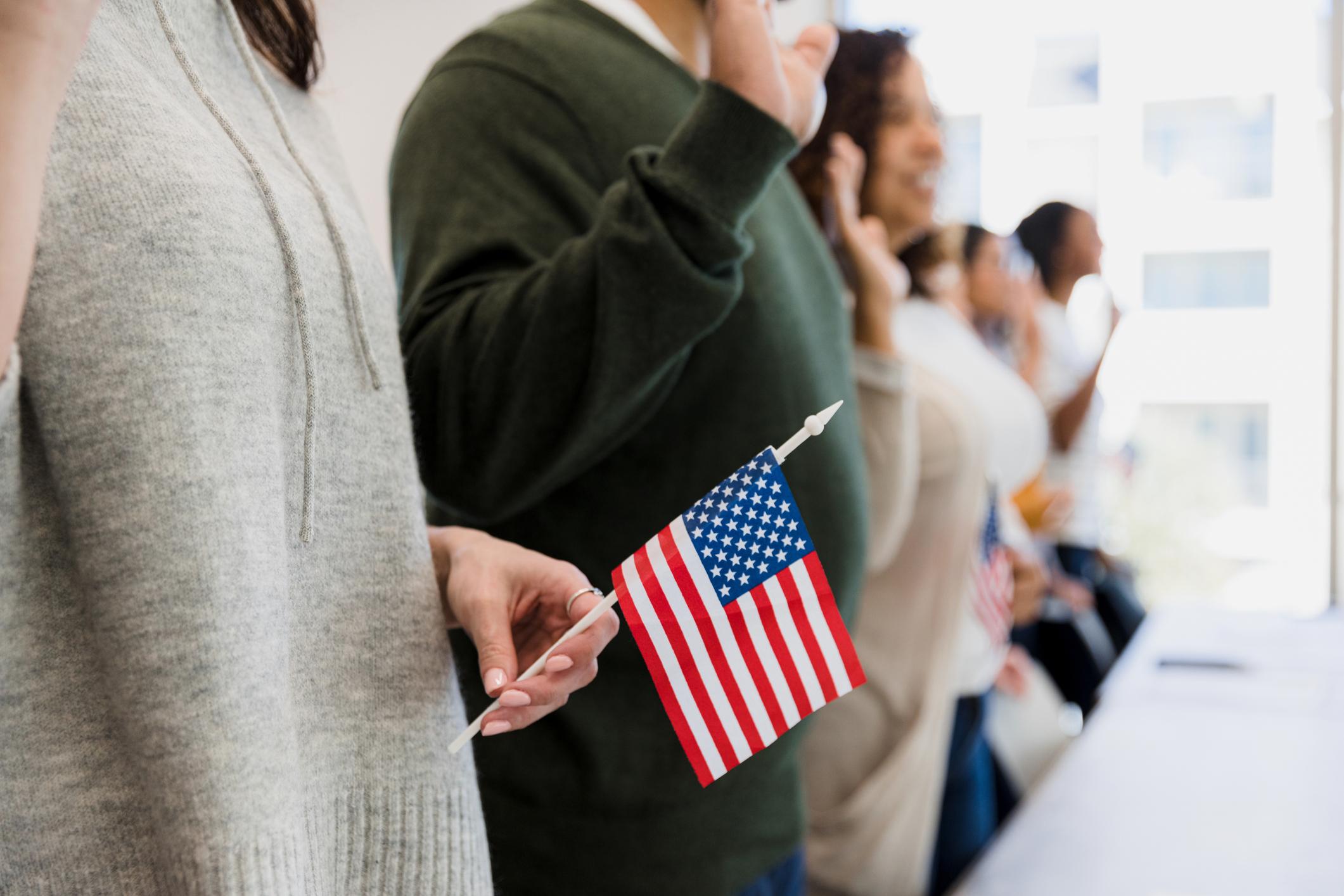
- Step 7: Oath ceremony and follow-up. Once approved, you will attend a naturalization ceremony to take the Oath of Allegiance and receive your Certificate of Naturalization. You can then update other records and apply for a U.S. passport
If you have questions about any of these stages, our Columbus naturalization lawyers can explain what to expect and help you prepare.
Should I Hire a Columbus Naturalization Lawyer?
Although you are not required to hire a lawyer, the right legal help can make a real difference, especially if anything in your history is complicated. For example, common red flags include multiple or lengthy trips outside the United States, arrests or citations (even if charges were reduced or dismissed), prior immigration denials, mistakes in earlier applications, child support or tax problems, name changes, and questions about Selective Service. These issues do not always prevent citizenship, but they do require careful strategy and complete documentation.
An immigration lawyer for naturalization can spot problems early, align your filing date with your eligibility window, organize evidence, and prepare you for your interview knowing the specific facts of your case. If an officer requests more information, your lawyer can respond on time with the right proof. If your interview raises concerns, a lawyer can clarify the law and facts and help avoid misstatements that could delay approval.
Even for straightforward cases, legal guidance still adds value. A lawyer will verify that you are filing at the earliest eligible date, will ensure your application is accurately completed, and will help you feel confident on test day.
Why Choose the Columbus Naturalization Lawyers at Brown Immigration Law?
At Brown Immigration Law, our team has guided individuals and families through the naturalization process for decades. Our attorneys have earned strong professional recognition over the years, but what clients value most is our focus on preparation, communication, and steady guidance from start to finish.
When you work with our Columbus naturalization lawyers, you receive:
- Clear explanations about eligibility, timing, and documentation
- Careful review of travel history, prior filings, criminal records, and other issues that may affect your case
- Local familiarity with procedures at the USCIS Columbus Field Office, where most interviews take place
- Consistent communication so you always know the next step
From the first eligibility review to your Oath of Allegiance, we aim to reduce surprises and keep your case on track. To discuss your path to citizenship, contact our Columbus team to schedule a consultation.


Start Your Citizenship Process in Columbus Today
Becoming a U.S. citizen is a meaningful milestone, and the process is easier when you have clear guidance at each step. Whether you have a straightforward case or a situation involving travel history, prior filings, or other complications, our Columbus naturalization lawyers can help you prepare with confidence.
Brown Immigration Law works with applicants across central Ohio, offering local insight into USCIS procedures and a steady, organized approach to each stage of the naturalization process. If you are ready to take the next step, contact our Columbus office to begin your path toward citizenship.